Basics · 8 min read
Personal Color Test in Korea: What Happens and How to Do It Online
What a Korean personal color test (퍼스널 컬러 진단) involves, what it costs, what you get, and how to do a Korean color analysis online from a selfie.
By SeoulTonePublished Updated
The short answer
A Korean personal colour session typically compares fabric drapes near your face under controlled lighting, then suggests a tone family and sub-type. Some services also include makeup, hair or accessory guidance. Online photo analysis offers a convenient estimate, but cannot recreate controlled in-person draping; check the studio’s actual package, duration and language support before booking.
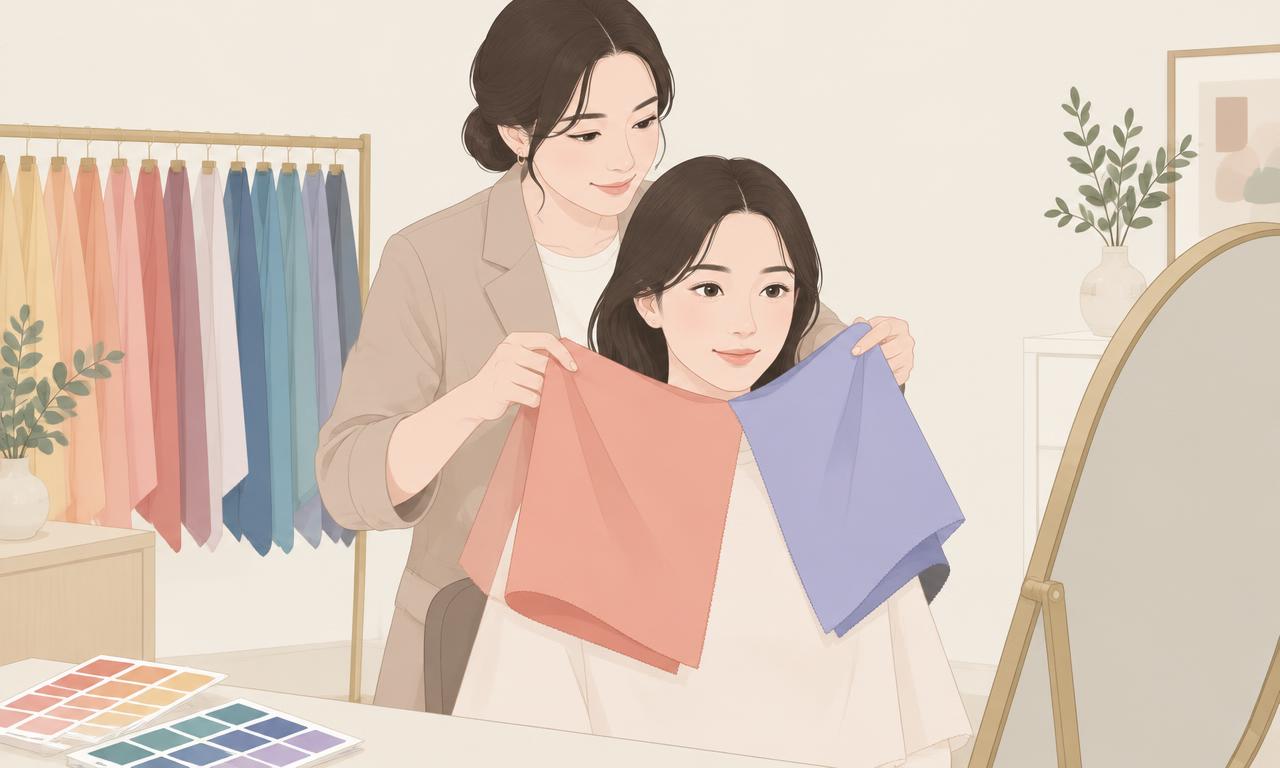
A personal color test / personal color diagnosis (퍼스널 컬러 진단) has become one of the most popular beauty experiences in Korea, especially in Seoul neighbourhoods like Hongdae, Gangnam and Seongsu. Visitors book sessions the same way they book a hair appointment, and many travellers plan a trip around one.
What happens in a Korean personal color session
You arrive bare-faced or with makeup removed on site. A consultant seats you in front of a mirror under daylight-balanced lights, wraps your hair and clothing in a neutral cape, then holds dozens of coloured fabric drapes under your chin. They watch how your skin, under-eye area and jawline react: does the colour make you look clearer and brighter, or shadowed and tired?
The four tones and twelve sub-types
Korean studios first decide your family — Spring Warm (봄 웜톤), Summer Cool (여름 쿨톤), Autumn Warm (가을 웜톤) or Winter Cool (겨울 쿨톤). They then narrow it down to a sub-type such as Light (라이트), Bright (브라이트), Mute (뮤트) or Deep (딥). The result is a season like Summer Mute (여름 뮤트) or Winter Deep (겨울 딥).
Makeup and hair testing
Most sessions continue with lipstick and blush tests, comparing a few shades on each side of your face. Some studios also test hair colour cards and jewellery metals, and premium packages add styling advice or a shopping list.
What you take home
You usually leave with a printed or digital palette card, a list of best and worst colours, and product suggestions. Results are typically given in Korean season names, which is why it helps to know how they map to Western names like Soft Summer or Deep Winter.
Limitations of an in-person test
Results depend on the consultant's eye, the lighting and even how tired you are that day. Two studios can give slightly different answers, especially for people who sit between two seasons. That doesn't make the test useless — it means your result is a strong guide, not a fixed label.
Doing a Korean color analysis online
If you can't get to Seoul, you can follow the same logic at home. Take a bare-faced selfie in indirect daylight, facing a window, with your hair pulled back and a white top. A good online analysis reads your skin, eye and hair colours from the photo and asks a few questions to fill gaps that a camera can't see, like vein colour and how you tan.
How our online test compares
Our full analysis uses the same 12-season Korean system and returns your season in both Korean and English names, a personal palette, makeup shades, hair ideas and AI-made outfit pictures of you in your colours. It's not the same as sitting with a trained consultant, but it's a fast, affordable way to start — and you can retake it in different daylight to check how steady the result feels.
Tips before you book anywhere
Go without coloured contact lenses, skip self-tan for a week, and bring the lipstick and foundation you wear most so you can check them against your result. If you already know your rough undertone from a free quiz, you'll get more out of the session.
About this guide
Published by SeoulTone, the service behind the quiz and photo analysis linked in this guide. The advice uses seasonal colour frameworks and Korean beauty terminology; it is styling guidance, not a clinical assessment or a professionally verified personal diagnosis.
At-home tests and skin-tone labels are approximate clues. Skin depth, ethnicity, vein colour and sun response do not establish a season; olive colouring can lean warm, cool or neutral. Unexpected skin changes should be discussed with a qualified healthcare professional.
Illustrations and AI-generated examples are illustrative, not evidence of an individual’s season. Photo estimates depend on lighting, camera processing and makeup; test suggested shades in daylight before buying.
Explore related palettes
Frequently asked questions
How long does a personal color test in Korea take?
Most sessions take 1 to 2 hours, including draping and makeup testing.
Can I do a Korean personal color test online?
Yes. A good selfie in daylight plus a short questionnaire can place you in a Korean season, though lighting affects accuracy.
Do Korean studios use 12 seasons?
Many use 4 tones with 2 to 4 sub-types each, which together cover the same 12 seasons used in Western analysis.
Find your season
Take the free 2-minute quiz, or get your full report from a selfie.