Makeup · 9 min read
K-Beauty Shade Names Decoded: 21N, MLBB & Lip Tints
Learn what Korean cushion numbers, C/N/W letters and MLBB lip tint labels mean, with official brand examples and an easy daylight testing method.
By SeoulTonePublished Updated
The short answer
Read a K-beauty shade inside its exact product line, not as a universal code. In HERA’s official Black Cushion chart, the first number indicates depth, C means cool and N means neutral, while the final digit describes tone intensity [1]. Other brands use different ranges: JUNGSAEMMOOL lists C, N and W shades with its own depth names [2]. For lip tint, MLBB means ‘my lips but better’, so your natural lip colour matters as much as your season. Compare two or three candidates in daylight and let each formula settle before deciding.
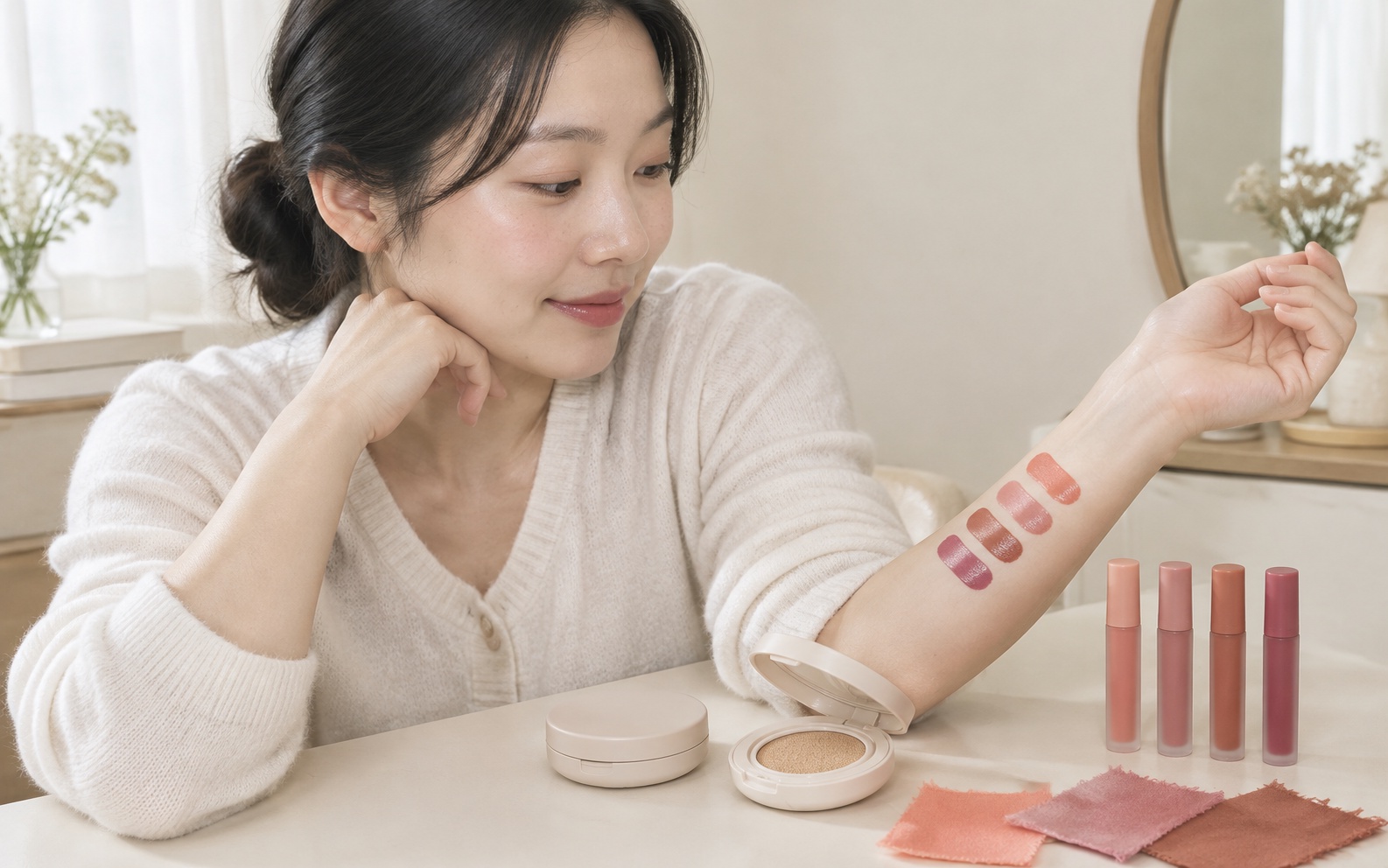
K-beauty shopping can feel like learning two languages at once. A cushion might be called 21N1, 23W or Rose Vanilla, while a lip tint is described as MLBB, muted fig or Spring Warm (봄 웜톤). These clues are useful—but only when you know which system they belong to. The safest approach is to decode the exact product chart first, then use your personal colour season to narrow the shades worth testing.
Start with the product line, not the number
Before comparing shades, write down the brand, full product name and shade code. ‘21N’ on its own is incomplete: a matte cushion, a glow cushion and a liquid foundation can have different colours even within one brand. Keep the official shade chart open and ignore conversion tables that promise a perfect match across every brand. Your goal is to find two or three plausible candidates, not to infer a match from a familiar number.
What 21N1 means in HERA’s chart
HERA provides a useful example of a structured code. Its official Japanese Black Cushion guide explains the code in three steps: the first number represents brightness or depth; the letter represents tone; and the final digit represents tone intensity. In that chart, 17 is classed as light, while 21, 22 and 23 sit in its medium/natural group. N denotes a neutral base and C a pink-based cool option [1]. This is an explanation of HERA’s system, not a universal definition for every Korean foundation.
Why 21N is not the same everywhere
JUNGSAEMMOOL’s official US Essential Skin Nuder Cushion range illustrates the difference. Its listed shades include 13N Fair, 13W Fair Ivory, 17C Fair Pink, 19N N-Light and 21W Medium, extending into much deeper numbered options [2]. The names and groupings are specific to that range. A person who wears 21N in one product cannot assume that 21N—or even 21W—in another line will match. Use the seller’s current chart for the precise cushion you intend to buy.
Do C, N and W always mean cool, neutral and warm?
They often do, but the brand’s legend is the authority. HERA explicitly defines C as cool and N as neutral in the cited Black Cushion chart [1]. JUNGSAEMMOOL uses C, N and W across named shades in its own range [2]. Do not extend that interpretation to every letter on every product: some names are collection codes, and some charts use different terminology. If no legend is available, compare the brand’s written colour description rather than guessing from one letter.
What warm and cool mean on Korean displays
ETUDE’s official personal colour page groups Spring and Autumn under yellow base, and Summer and Winter under blue base. It pairs Spring with clear peach and coral examples, Summer with powdery pale pink and lavender, Autumn with earthy brick and mustard, and Winter with vivid magenta, cherry and burgundy [3]. These examples show the broad direction of Korean seasonal displays. They do not mean every coral is warm, every pink is cool or every person in a season must wear the same lipstick.
A quick lip-tint name dictionary
Peach, apricot, coral, cinnamon and terracotta usually suggest warmth; rose, raspberry, plum, berry and blue-red usually suggest coolness. Brick, fig, cherry, beige and nude are less decisive because each can be mixed warmer or cooler. ‘Muted’, ‘dusty’ and ‘ash’ describe lower clarity rather than temperature. ‘Deep’ usually describes depth, while ‘bright’ describes clarity. Treat the name as a clue and confirm it against an unfiltered swatch photographed in neutral daylight.
What MLBB actually means
MLBB stands for ‘my lips but better’: a shade that looks like a slightly more even, defined version of your natural lips. It is not one universal rosy nude. If your lips are pale peach, strongly pink, plum-toned or deep brown, your MLBB starting point will differ. In indirect daylight, look at the centre of your bare lower lip. A useful first candidate is close to that colour, with a little more evenness or depth—not necessarily the pale beige shown in a campaign.
MLBB for Spring Warm (봄 웜톤)
Start with peach rose, soft apricot, warm pink or light coral that stays close to your natural lip depth. Spring Light (봄 라이트) can try sheer peach-pink; Spring True (봄 트루) can move toward fresh coral; Spring Bright (봄 브라이트) can handle a clearer warm pink. If a ‘nude’ turns grey or orange on you, the problem may be its base rather than the Spring label.
MLBB for Summer Cool (여름 쿨톤)
Start with rose pink, dusty rose, soft mauve or a sheer cool berry. Summer Light (여름 라이트) usually suits a lighter pink-rose; Summer True (여름 트루) a medium rose; Summer Mute (여름 뮤트) a softened rosewood or mauve. Natural lips with strong purple pigment can make a pale tint look brighter or cooler than its arm swatch, so check the result on your whole face.
MLBB for Autumn Warm (가을 웜톤)
Start with warm rosewood, muted cinnamon, soft brick or peach brown. Autumn Mute (가을 뮤트) can try a softened rose-brown; Autumn True (가을 트루) a warmer brick rose; Autumn Deep (가을 딥) a deeper cinnamon or brown rose. A nude should not erase your natural lip colour completely; retaining some depth often looks more harmonious.
MLBB for Winter Cool (겨울 쿨톤)
Start with cool rose, berry rose, muted plum or a sheer cherry stain. Winter Deep (겨울 딥) can explore deep berry; Winter True (겨울 트루) clear cool rose or cherry; Winter Bright (겨울 브라이트) a more vivid pink-berry. MLBB does not have to mean pale: for deeper natural lips, a rich berry can be the subtle everyday option.
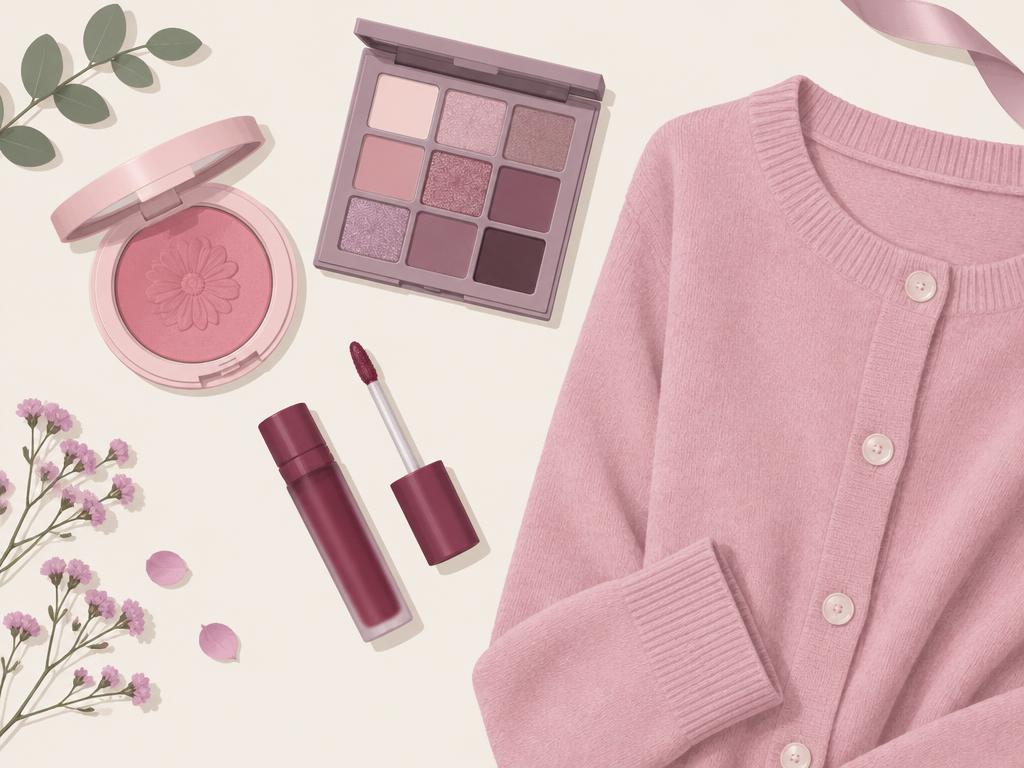
21N vs 23N: compare depth without changing tone
When two codes in one line share the same undertone family, they can be useful depth comparisons. Within HERA’s cited chart, for example, 21N1 and 23N1 are separate neutral shades in its medium/natural group [1]. That does not establish which one you need. Apply thin stripes of both along the jaw toward the neck, using the same amount. If 21 leaves a pale boundary and 23 disappears into the neck, 23 is the better depth clue; if 23 looks dull or dark, revisit 21. Then compare a neighbouring undertone at the better depth if needed.
Test lip tint on lips, not only your arm
An arm swatch helps you compare hue, but it cannot show how the tint mixes with natural lip pigment. Apply one thin layer to clean lips, wait for the stain and finish to settle, then step away from the mirror and look at your whole face in daylight. Add a second layer only after judging the first. Check whether the colour turns unexpectedly orange, neon, grey or purple, and whether the remaining stain suits you after the gloss fades. Follow the retailer’s hygiene instructions for in-store testers and never share applicators directly on lips.
Test cushion at the jawline
Choose two or three shades from the exact product chart. Apply thin, separate stripes from the jaw toward the neck, with your usual skincare and no colour-correcting base on the test area. Let the formula settle, then compare in indirect daylight. Look for the least visible boundary rather than the lightest face. Recheck after normal wear because moisture, coverage and oxidation can change the appearance. A seasonal report can suggest a tone direction, but it cannot replace this physical match.
Finish changes what you see
A sheer water tint lets more natural lip colour through; an opaque velvet tint shows more of the pigment in the tube. Gloss reflects light and can make colour look fresher, while a thick matte layer can make the same shade appear deeper or flatter. Cushions also vary in coverage and radiance. Compare like with like where possible, and record the number of layers. ‘The same colour’ is not necessarily the same result when the formula changes.
A five-minute online shopping checklist
Save the exact product name, shade code and official chart. Find a daylight swatch on someone with similar natural lip pigment or skin depth, not just a similar season label. Check whether the image is filtered and whether the swatch is one layer or several. Read the remaining-stain description for tints and the finish description for cushions. Finally, confirm the return policy before opening a product. These steps reduce guesswork more effectively than buying a viral shade solely because a creator calls it your season.
When the season label does not work
Neutral and olive undertones can sit between simple warm/cool displays, and personal preference matters. If a recommended tint looks wrong in daylight, compare one variable at a time: warm against cool at similar depth, then muted against clear at the better temperature. Keep the shades that make you feel like yourself. Personal colour is a useful filter, not a reason to discard a product you already enjoy.
If you do not know your season yet, SeoulTone’s free quiz offers a starting direction. The full photo analysis adds personalised makeup, clothing, hair and jewellery guidance, but camera lighting still affects estimates. Use the report to create a shortlist, then confirm lip and base shades in daylight before buying.
Sources & fact checks
About this guide
Published by SeoulTone, the service behind the quiz and photo analysis linked in this guide. The advice uses seasonal colour frameworks and Korean beauty terminology; it is styling guidance, not a clinical assessment or a professionally verified personal diagnosis.
Official brand pages supply the label examples below; they were checked on 25 November 2026 and ranges can change. SeoulTone has not laboratory-tested or ranked the products. Seasonal colour families are shopping clues, not rules, and brand charts do not use one universal numbering system. Screen swatches, natural lip pigment, application thickness, oxidation and lighting can all change the result.
Illustrations and AI-generated examples are illustrative, not evidence of an individual’s season. Photo estimates depend on lighting, camera processing and makeup; test suggested shades in daylight before buying.
Explore related palettes
Frequently asked questions
What does 21N mean in Korean cushion foundation?
There is no universal meaning. In HERA’s cited Black Cushion chart, 21 belongs to its medium/natural depth group and N means neutral [1]. Another brand can use 21N differently, so always read the exact product’s official chart.
Is 23N darker than 21N?
Within a chart that orders shades by depth, the numbers can help compare candidates. HERA lists both 21N1 and 23N1 as separate neutral options in its medium/natural group [1]. Test both at the jawline; do not transfer that assumption to another brand or product line.
What does MLBB mean in Korean lip tint?
MLBB means ‘my lips but better’. It describes a natural-looking enhancement of your own lip colour, not one fixed nude shade. Your natural pigment, the tint’s opacity and the remaining stain all affect the result.
Can I choose cushion foundation from my colour season?
Use your season only as a tone clue. Match the exact cushion at your jawline in daylight, checking both depth and undertone after it settles. A season cannot identify a universal shade number or guarantee a match.
Are coral tints always warm and pink tints always cool?
No. Coral often leans warm and pink often leans cool, but either can be mixed toward the opposite temperature. Compare the actual swatch in neutral daylight and consider how it changes on your natural lips.
Why does my MLBB tint look different after an hour?
The glossy or creamy surface may wear away while the stain remains, revealing a different balance with your natural lip pigment. Judge both the initial application and the settled stain before deciding whether the shade works for you.
Explore your season
Find your season
Take the free 2-minute quiz, or get your full report from a selfie.